

Conic sections, or simply conics, are curves formed by the intersection of a plane with a double cone. Depending on the angle of that plane, the resulting curve may be a circle, an ellipse, a parabola, or a hyperbola.
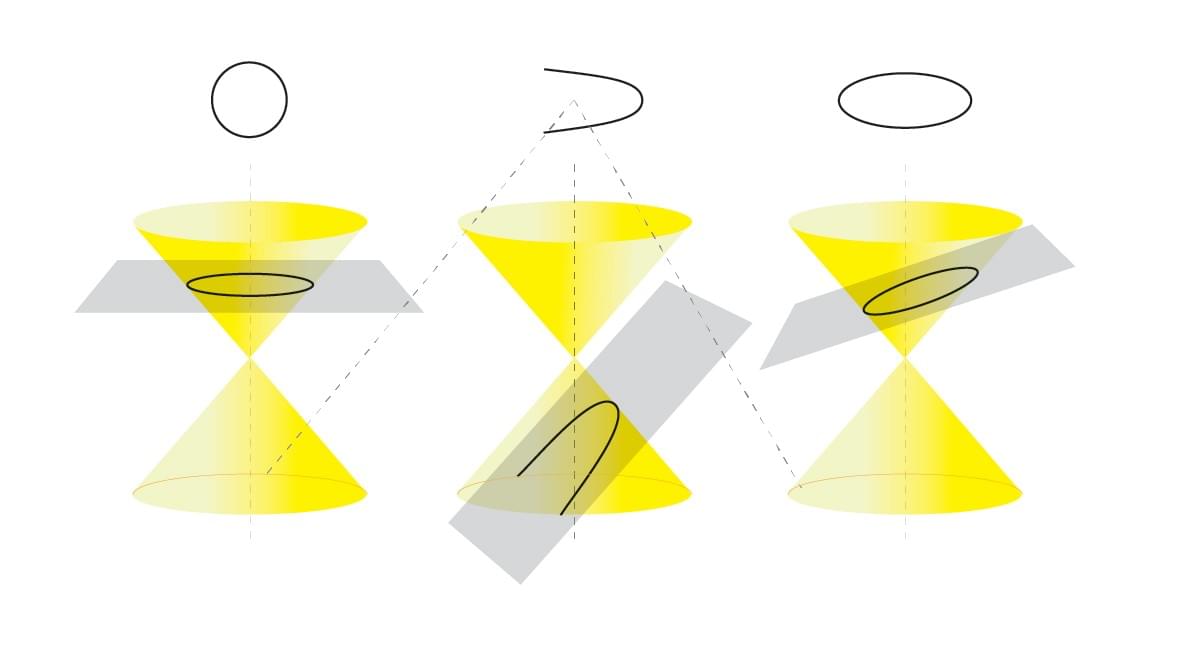
Conic sections, or simply conics, are curves formed by the intersection of a plane with a double cone. Depending on the angle of that plane, the resulting curve may be a circle, an ellipse, a parabola, or a hyperbola.
In geometry, these curves describe precise mathematical properties. In my artistic practice, however, they have become symbols. As I draw, sculpt, and compose, I find in them a language that seems to reveal something about life itself. These reflections did not emerge through academic study or rational analysis, but through contemplation and the repeated experience of creation.
To me, every curve embodies a fundamental movement.
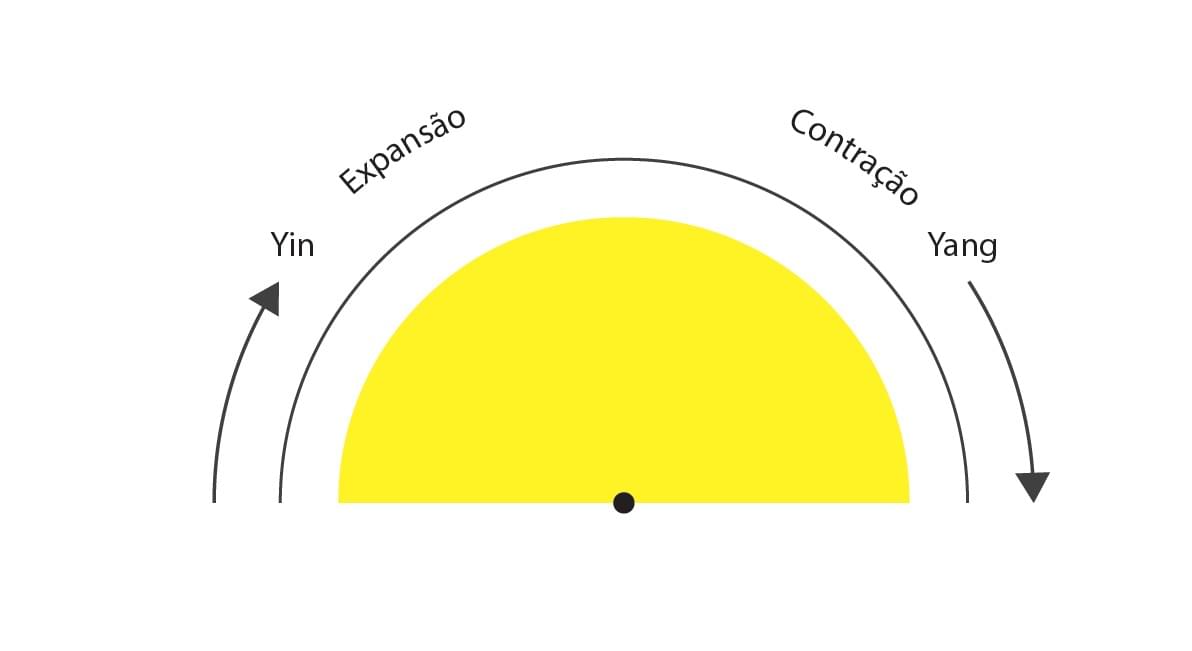
With the exception of the circle, every curve appears to contain both an impulse toward expansion and a movement of return. There is an ascending phase of growth, openness, and discovery, followed by a descending phase of contraction, transformation, and limitation. The first reminds me of the force of the Earth: fertile, creative, and life-giving. The second evokes the force of the Sky: the principle that shapes, contains, and gives form.
Perhaps this is why I have come to see the curve as an archetype of love.
Love is neither pure expansion nor pure withdrawal. It is the continuous movement between these two states. There are moments when we open ourselves to the unknown, and others when we return to our center; moments of creation, and moments of accepting our limits. Genuine love does not erase this rhythm—it lives through it.
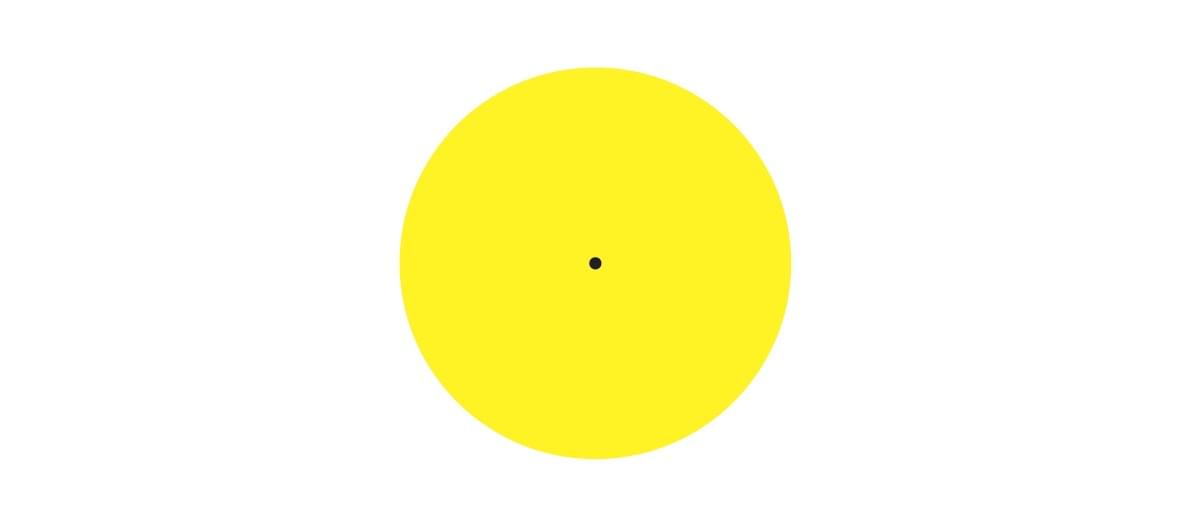
The circle seems to stand apart from this dynamic. It has no obvious beginning or end, no phase of growth or decline. I see it as an image of equilibrium: a form in which every point is equally distant from the center. Perhaps this is why it has always conveyed to me a profound sense of unity.
Yet even the most balanced structures are imperfect.
Structures belong to the world of form; spirit belongs to movement. The moment we cling too tightly to a structure, life slowly begins to fade from it. But when we hold it lightly, it remains alive.
I often think of this relationship as a kite. A kite needs a string in order to fly. If we let go completely, it disappears. If we pull too hard, it never rises. Creation requires precisely this delicate tension between freedom and structure.
It is within this space that I create.
I compose with circles, curves, lines, and colors as a child might play—guided by wonder, yet attentive. There is intention, but there is also surrender. There is technique, but there is also surprise. Rather than imposing an idea upon the material, I try to accompany what the material itself seems to reveal.
Creating a work of art feels, to me, much like participating in the mystery of life itself. I rely on strong structures because they provide roots, yet I always leave a door open for the wind to pass through them. That invisible wind reminds me of the way feng shui understands the flow of energy: unseen, yet capable of transforming a space without altering its physical structure.
Through this process, I gradually discover who I am.
Every drawing, sculpture, and painting becomes a mirror in which I recognize both my own structure and the invisible force that continually reshapes it. Creation ceases to be merely an aesthetic pursuit and becomes a path toward self-understanding.
There are countless ways of becoming oneself. This is simply mine.
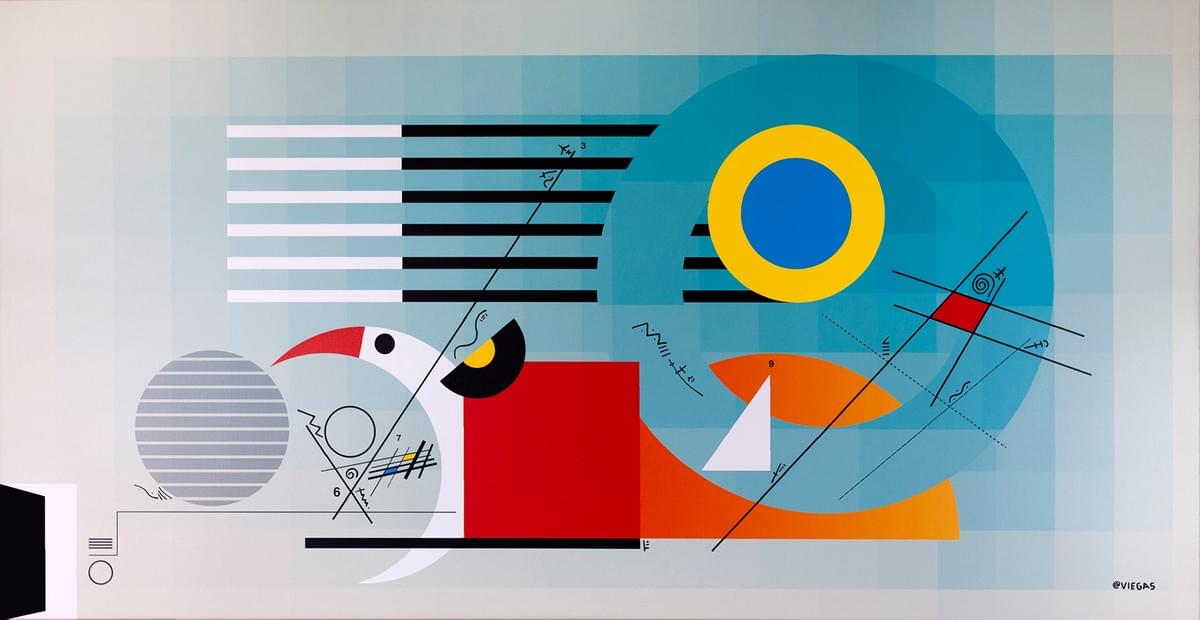
Yet I believe that every authentic work of art has the potential to awaken something in those who encounter it—not because it offers answers, but because it creates a space in which each person may recognize something of themselves. Often, becoming aware of our own wound is the first step toward healing.
Whenever I begin a new work, I try not to pursue a predetermined outcome. What interests me most is witnessing the moment when structures cease to be sufficient and something unexpected begins to emerge. It is then that I feel the work no longer belongs entirely to me.
Perhaps this is the deepest purpose of art: not to imprison creative energy within the form that contains it, but to allow that energy to remain alive beyond the work itself.
Perhaps that is why I always return to curves.
Within them I find an image of creation, of life, and above all, of love: a continuous movement between expansion and contraction, between freedom and structure, between who we are and who we are still becoming.